
About the Project
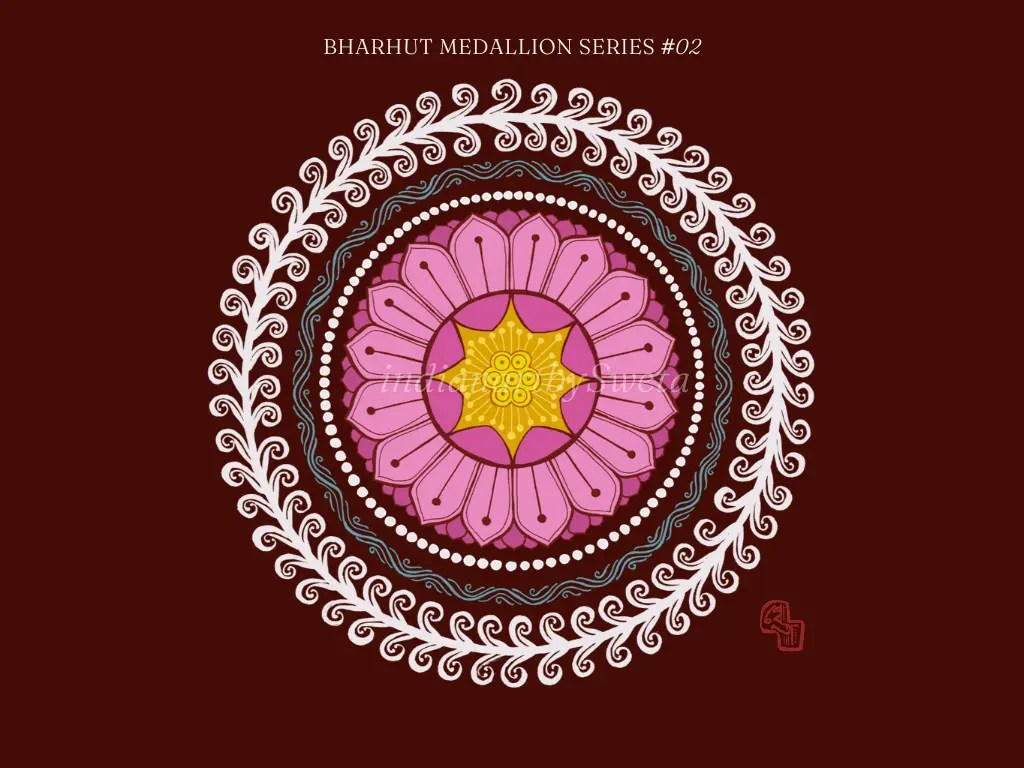
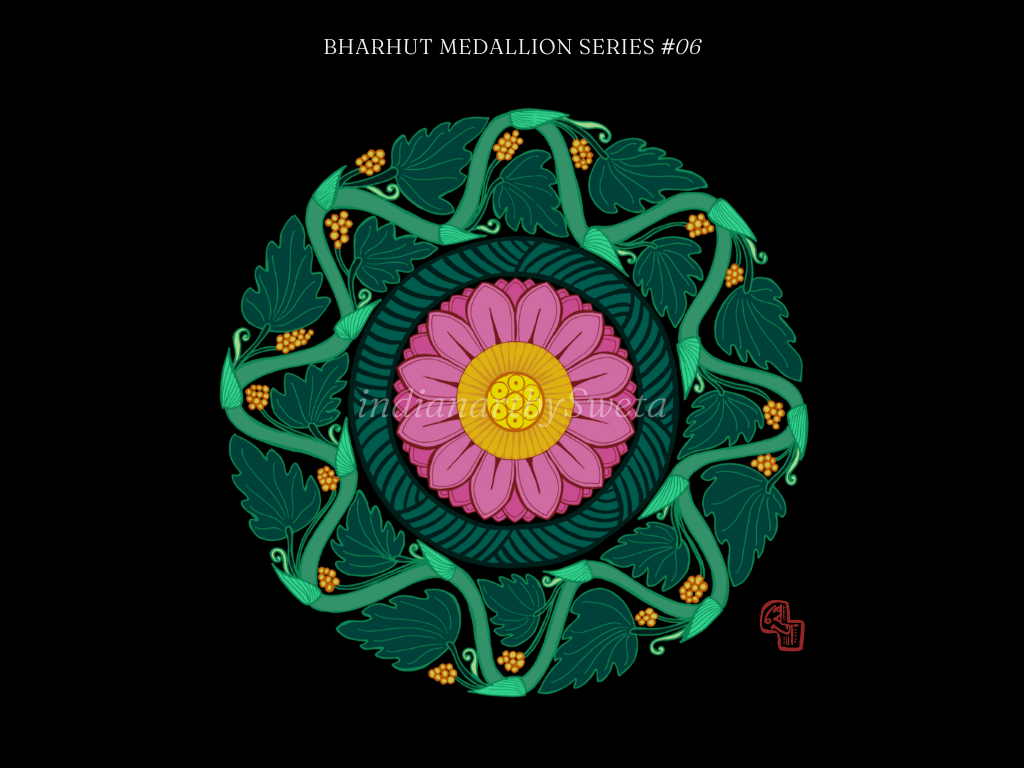
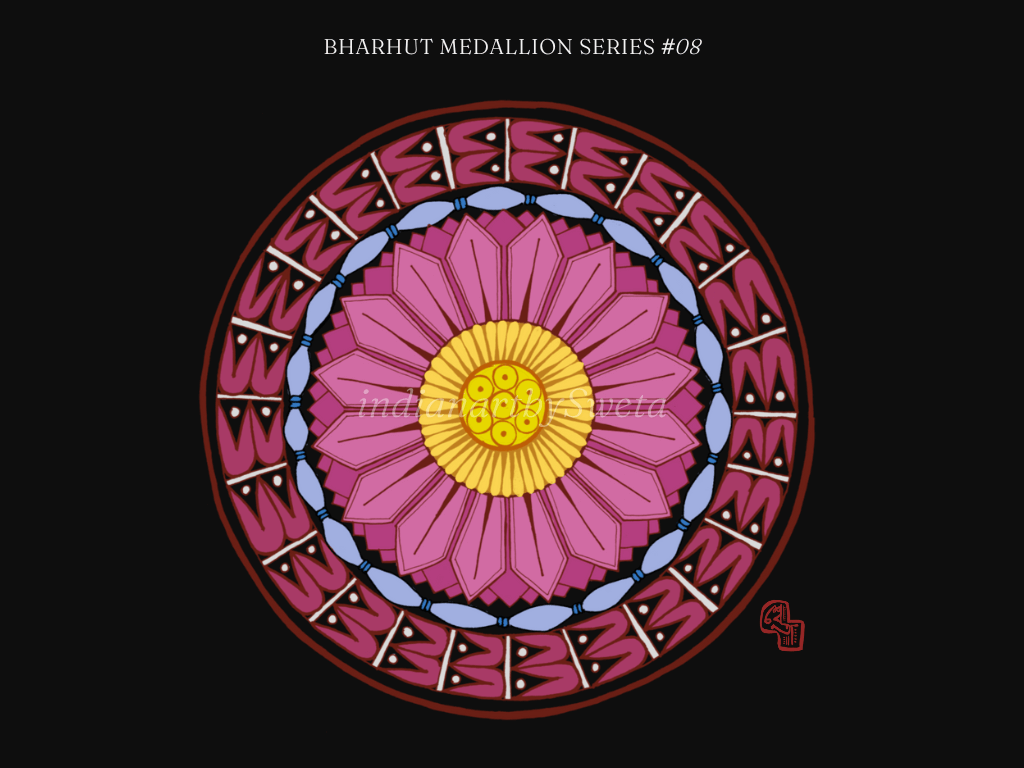
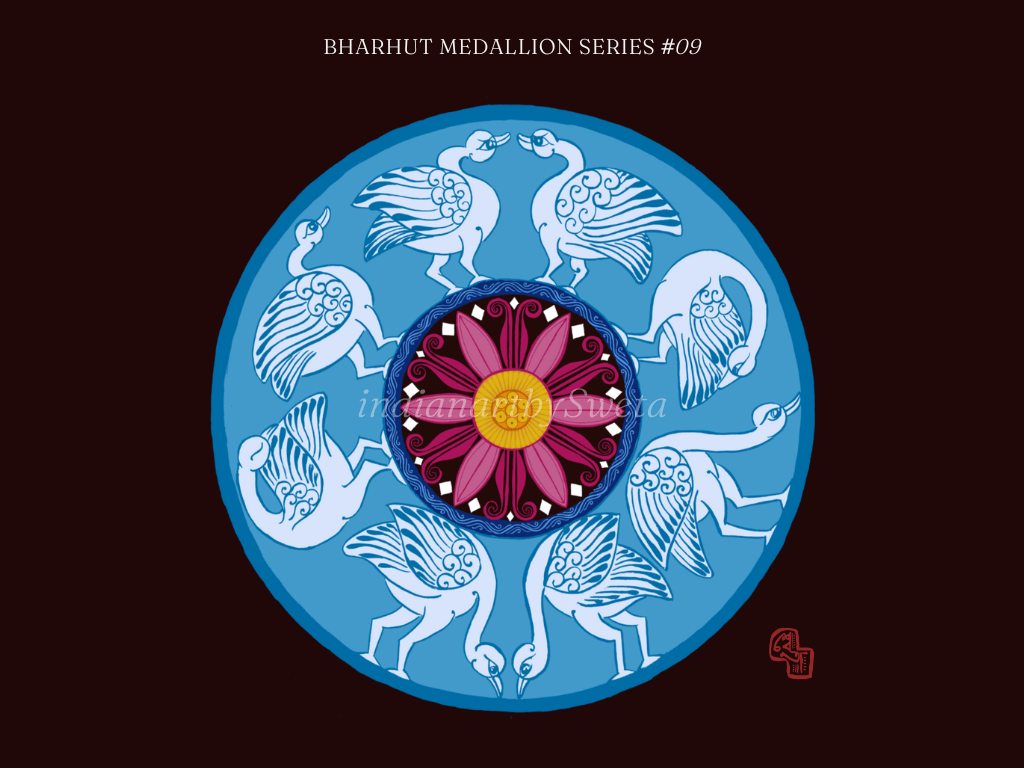
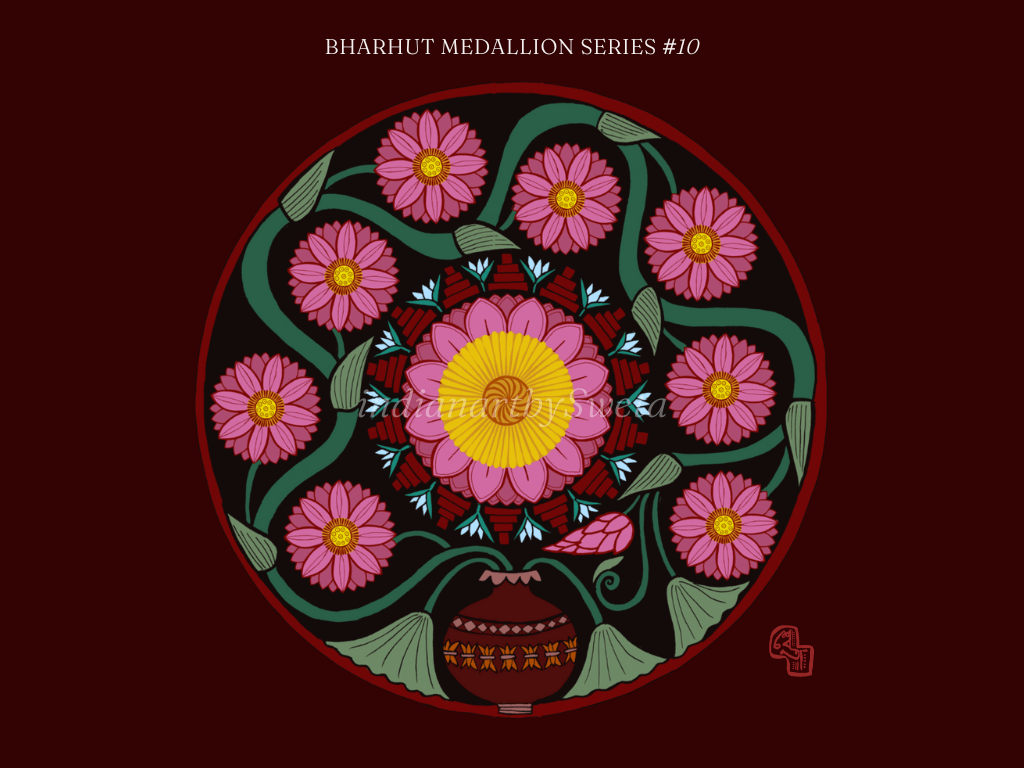
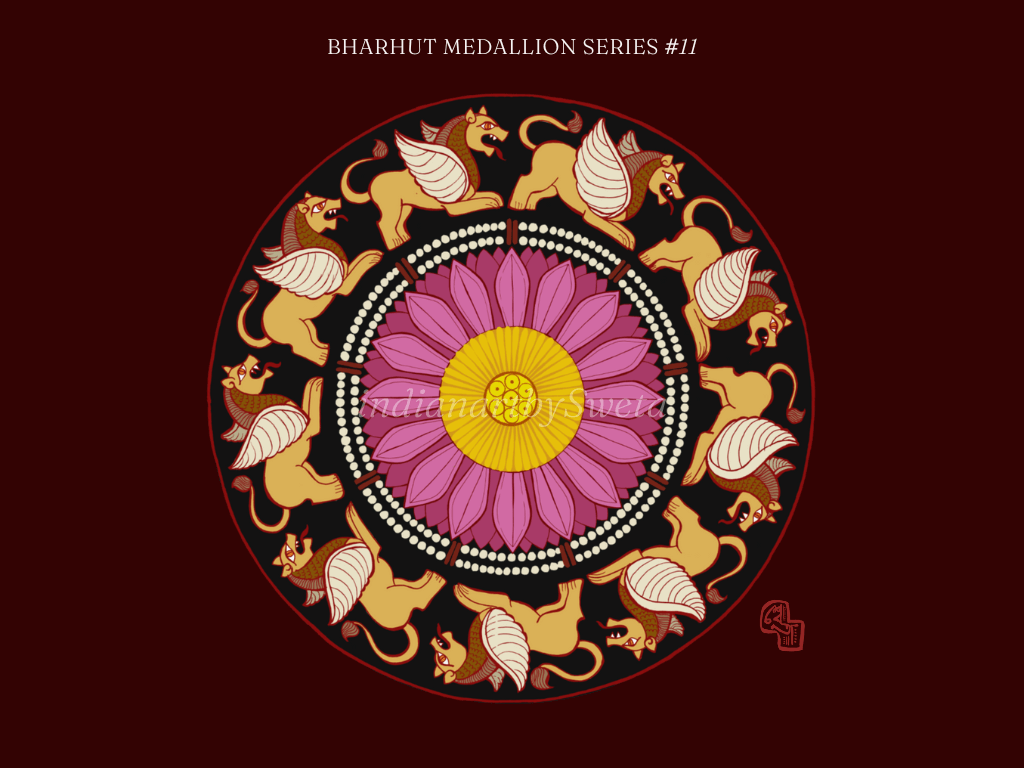
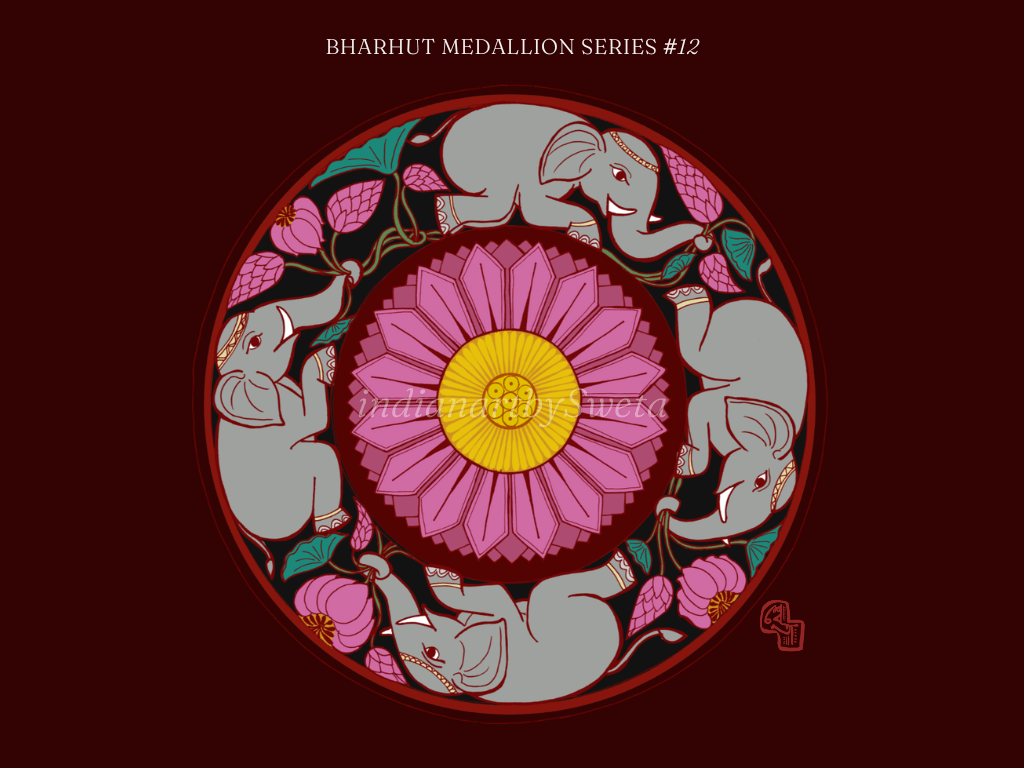
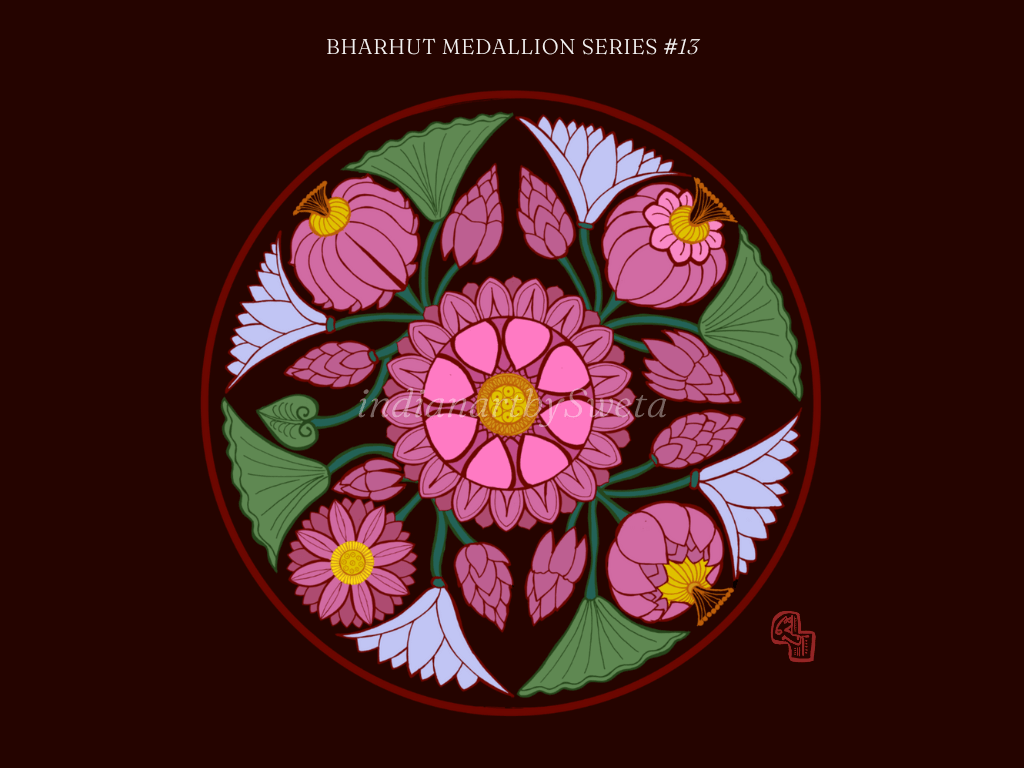
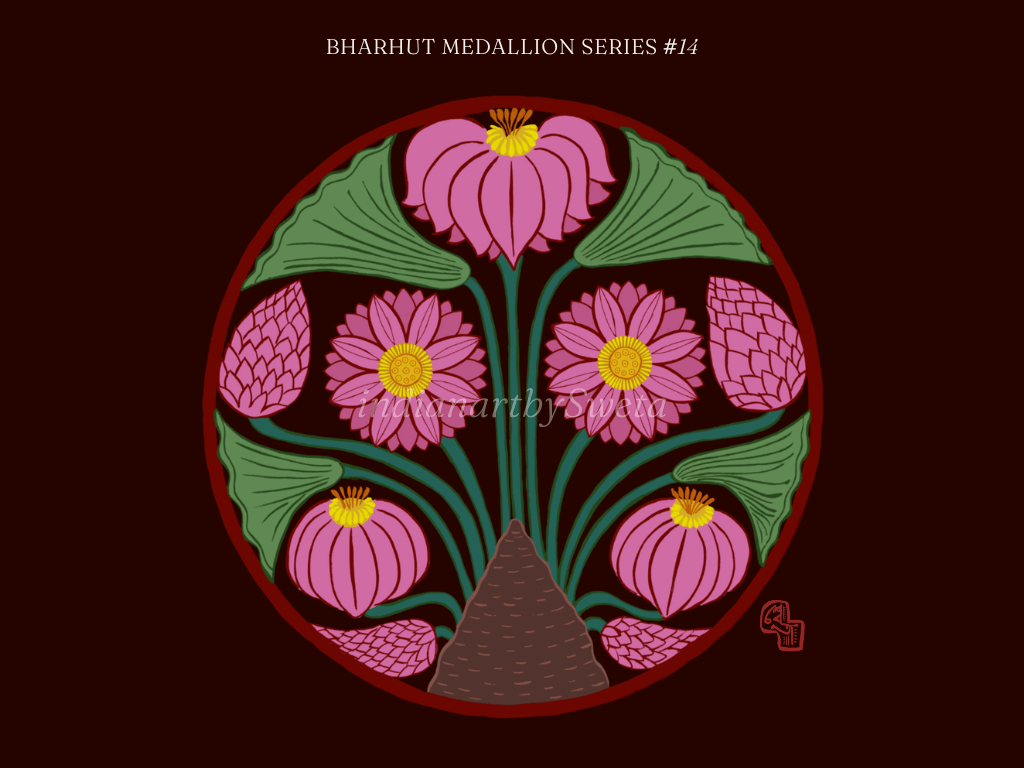
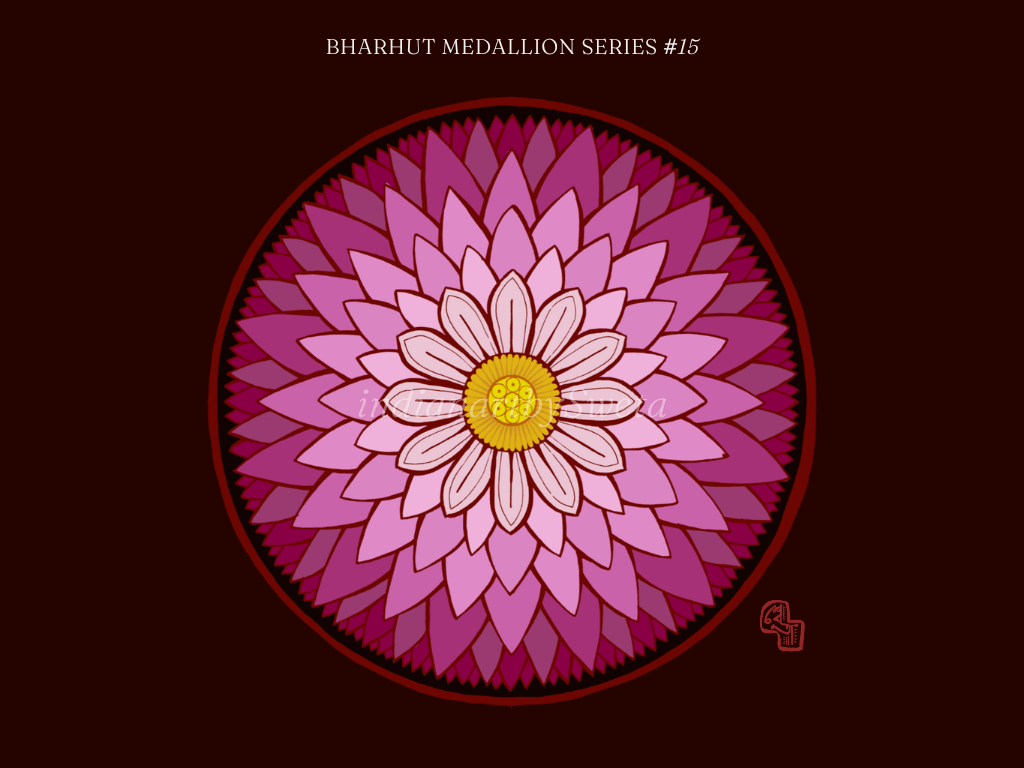
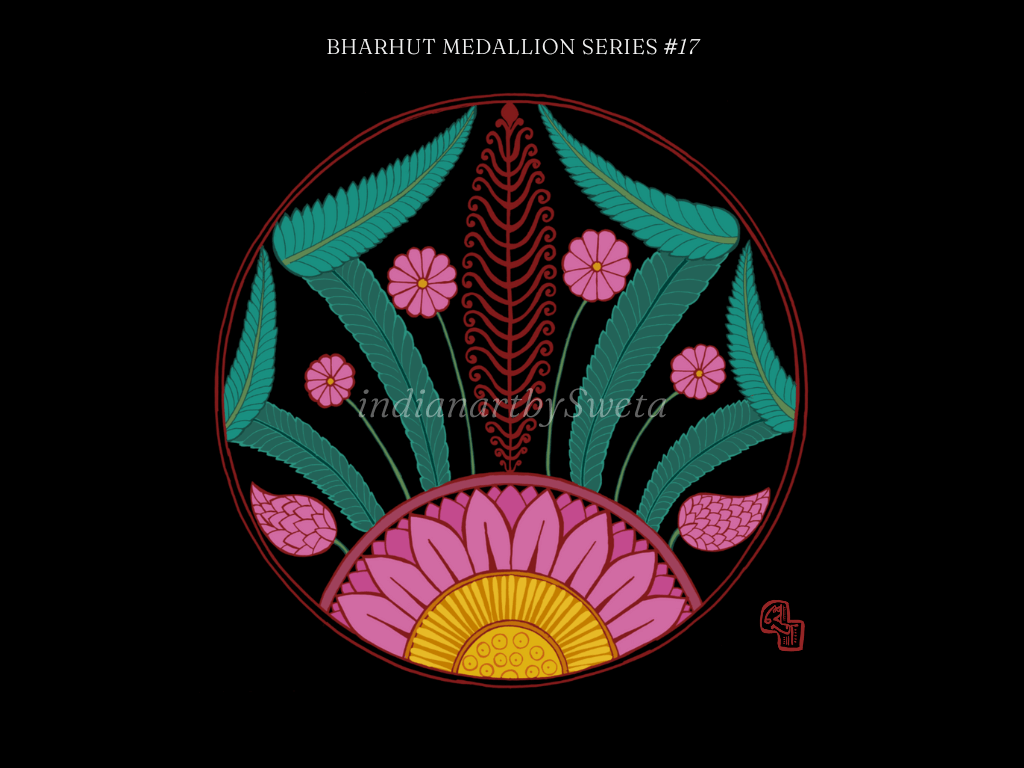
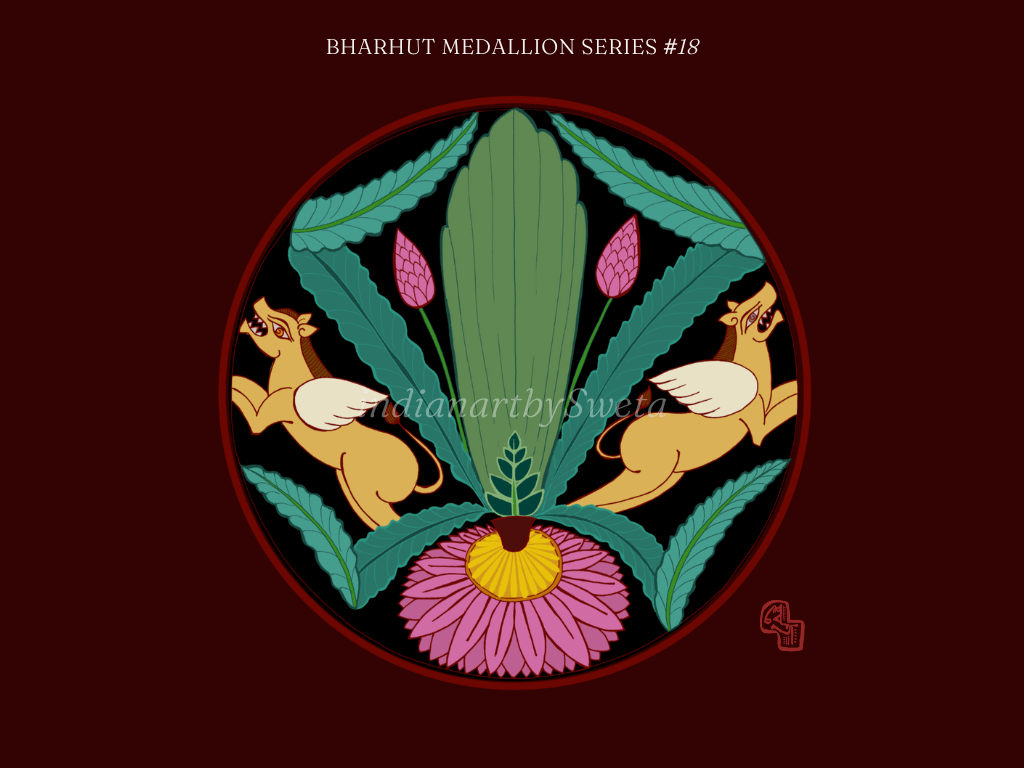
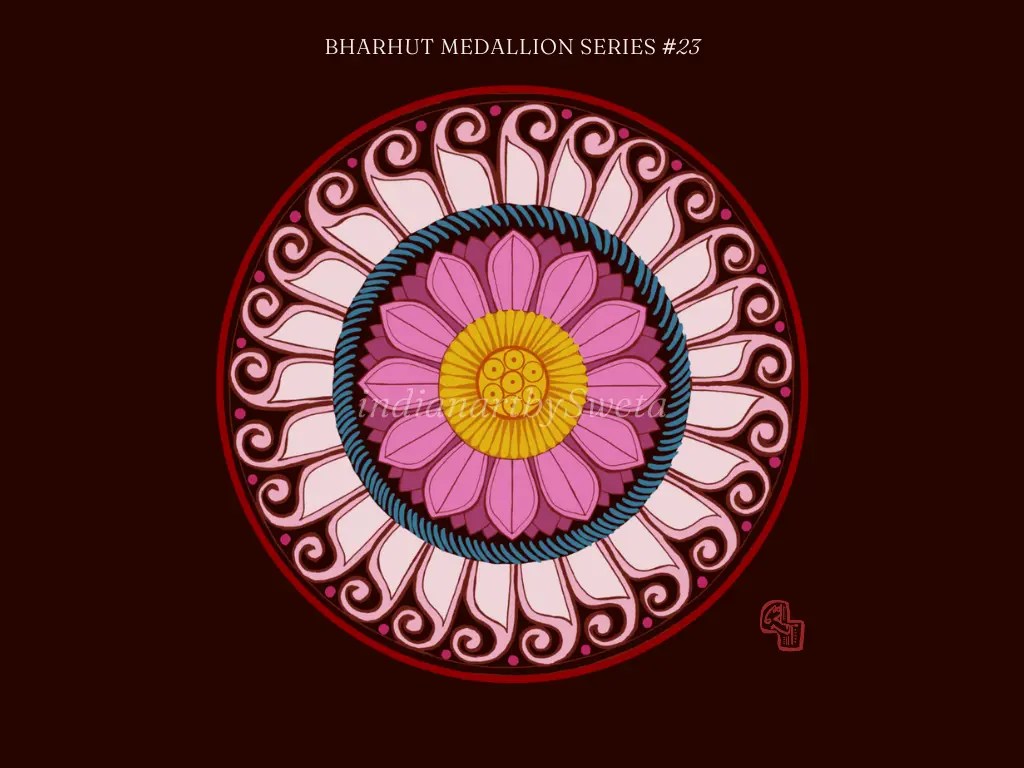
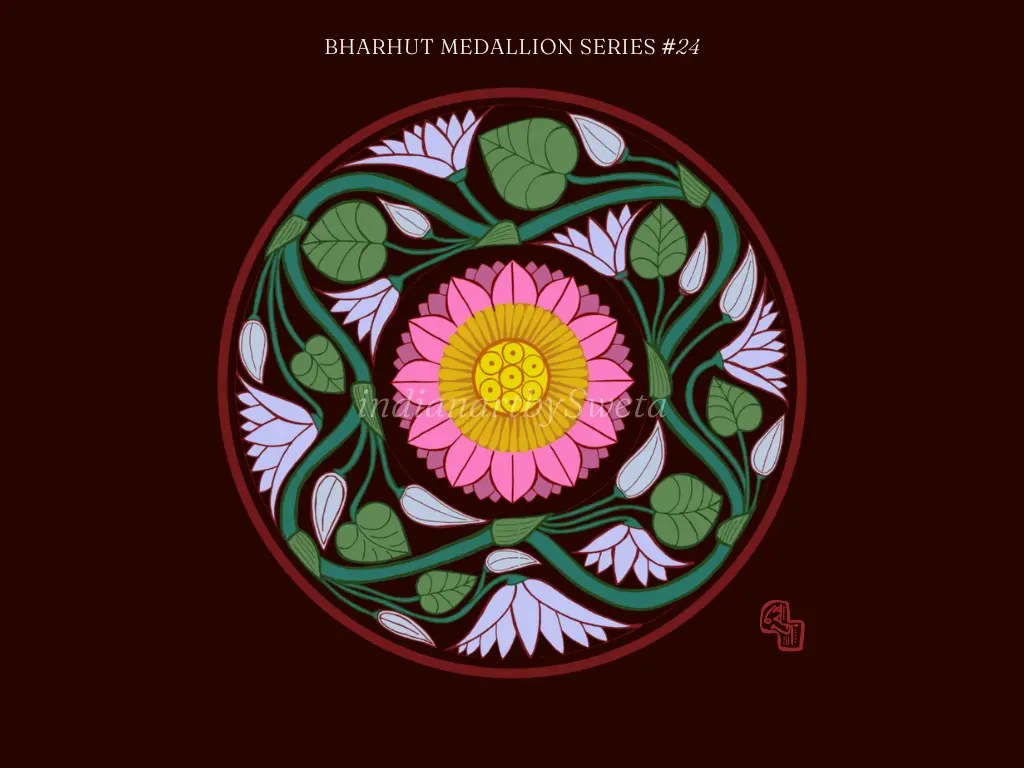
The Bharhut stupa, dating back to the 2nd century BCE, is a treasure of early Indian art where floral medallions, lotuses, animals, and sacred symbols embody both beauty and cosmology. In this series, I’ve reimagined 28 medallions from Bharhut through a contemporary illustration lens. Staying rooted in their symbolism—purity, water cosmology, balance, and life itself—I’ve used colour and subtle reinterpretations to bring these ancient carvings into a renewed light. This project is my way of bridging the timeless artistry of Bharhut with a renewed presence.
The Inspiration
In 2023, I visited the Bharhut Gallery at the Indian Museum, Kolkata. Since photography wasn’t allowed, I relied on memory—until I found Remains of Bharhut Stupa in Indian Museum by Arabinda Ghosh in the museum shop. That book became the seed of this series.
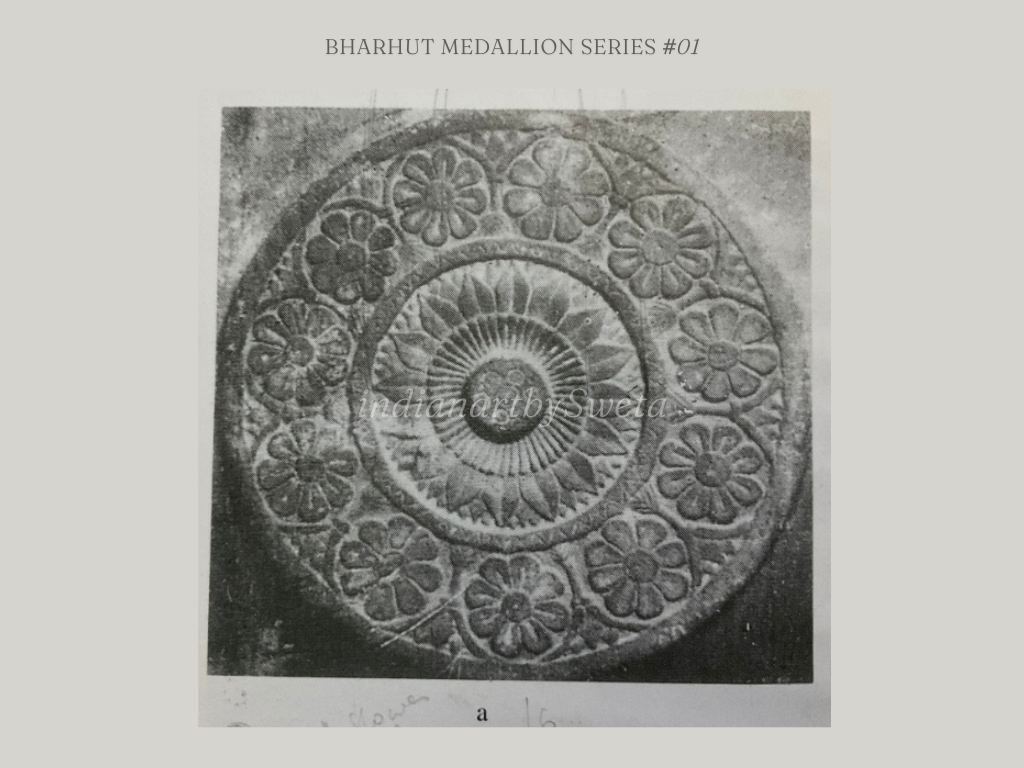
The Bharhut stupa (2nd century BCE) is among the earliest examples of Indian classical art. While its narrative reliefs often draw attention, what captivated me were the floral and natural motifs, such as lotuses, vines, birds, and animals. To me, they felt like precursors to alpana traditions: nature abstracted into form. They also transcend religion – universal in beauty, accessible to anyone.
Sketch to Screen
Studying the book’s photographs, I saw how most medallions centred on a lotus, radiating into concentric circles of natural motifs.
With limited studio space, I worked on A4 and A3 sheets, sketching and inking each medallion by hand before scanning and digitally assembling them. I deliberately kept hand-drawn imperfections—they give each medallion a character that pure digital cannot replicate. Final colouring was done in Affinity Photo, balancing tradition with a contemporary workflow.
Tools & Techniques

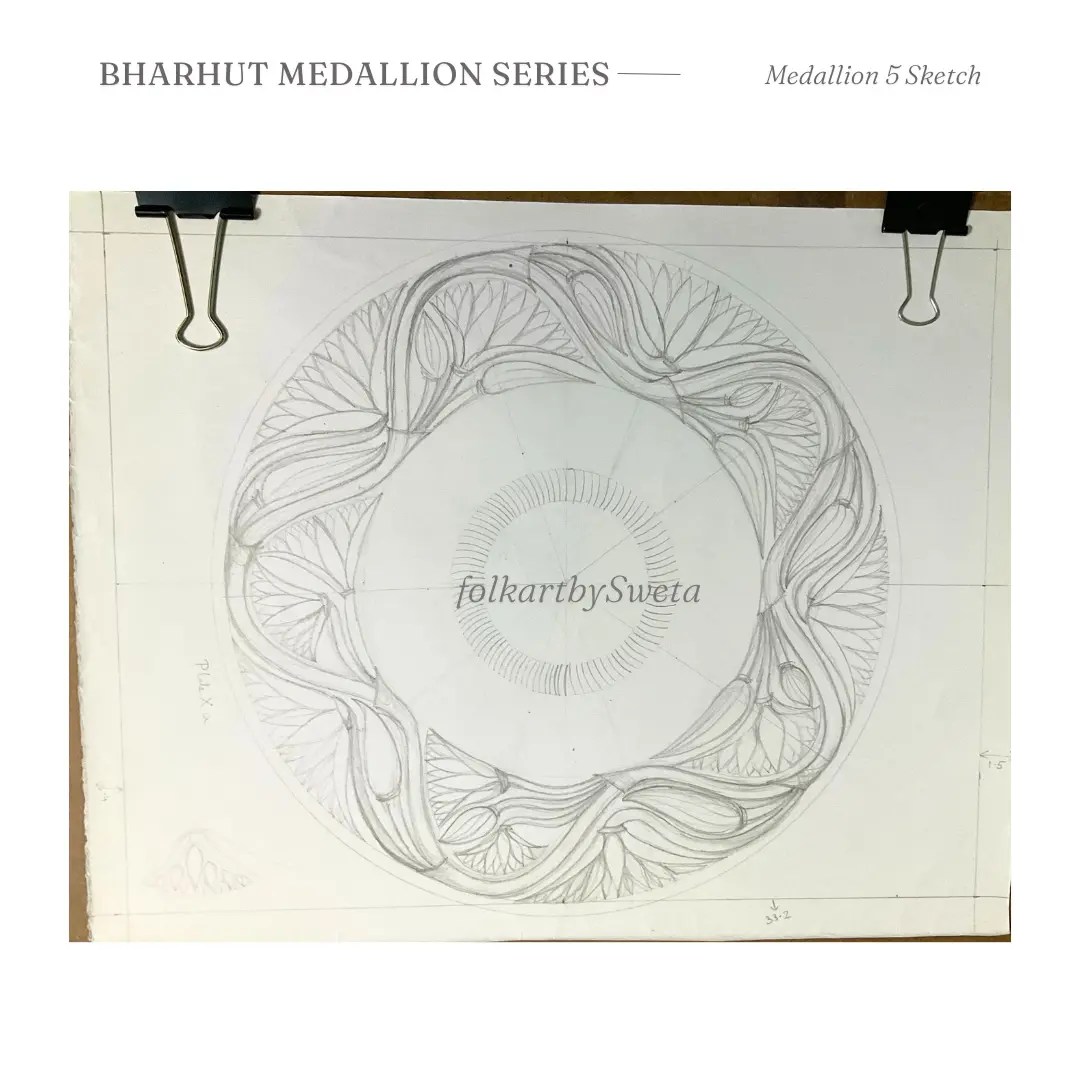
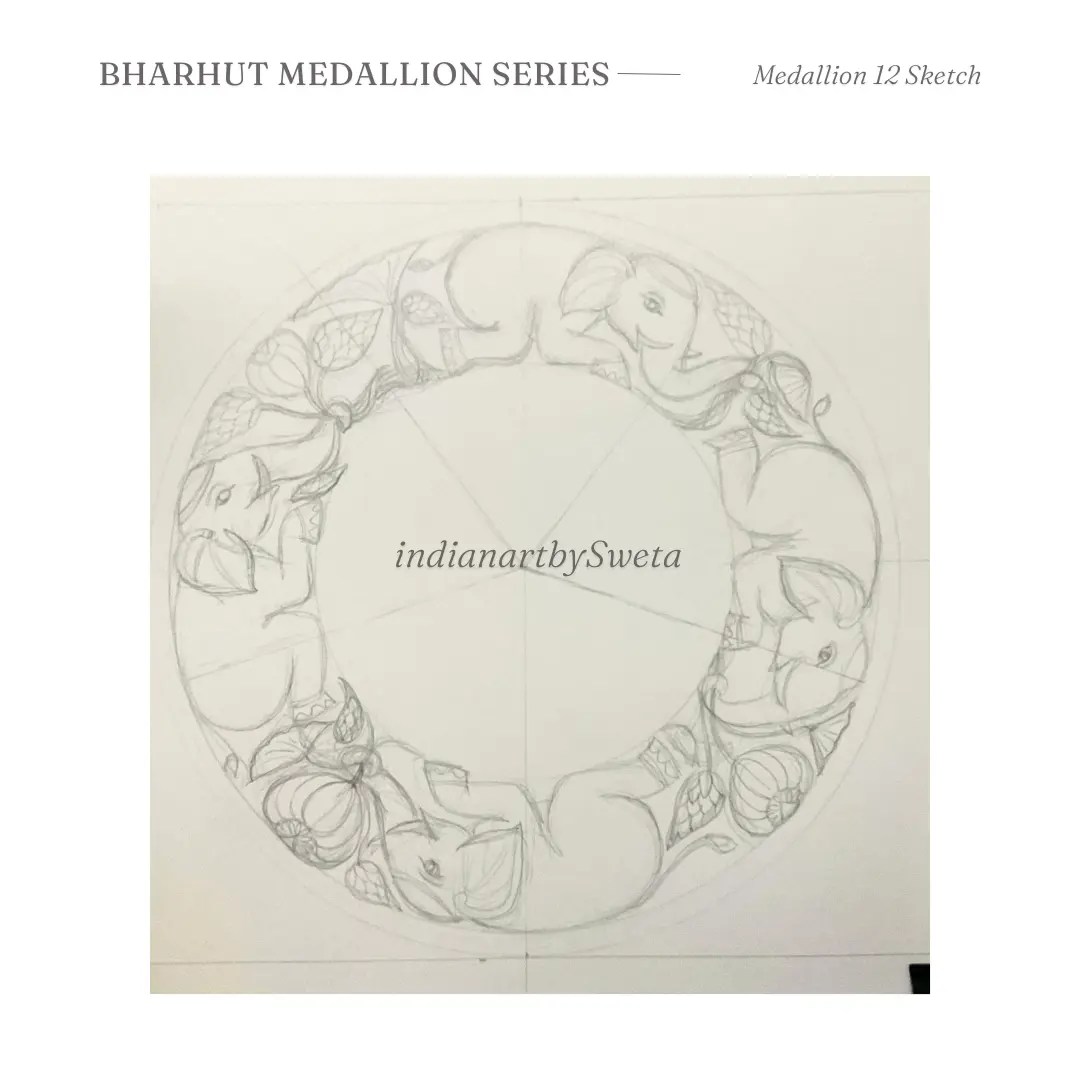
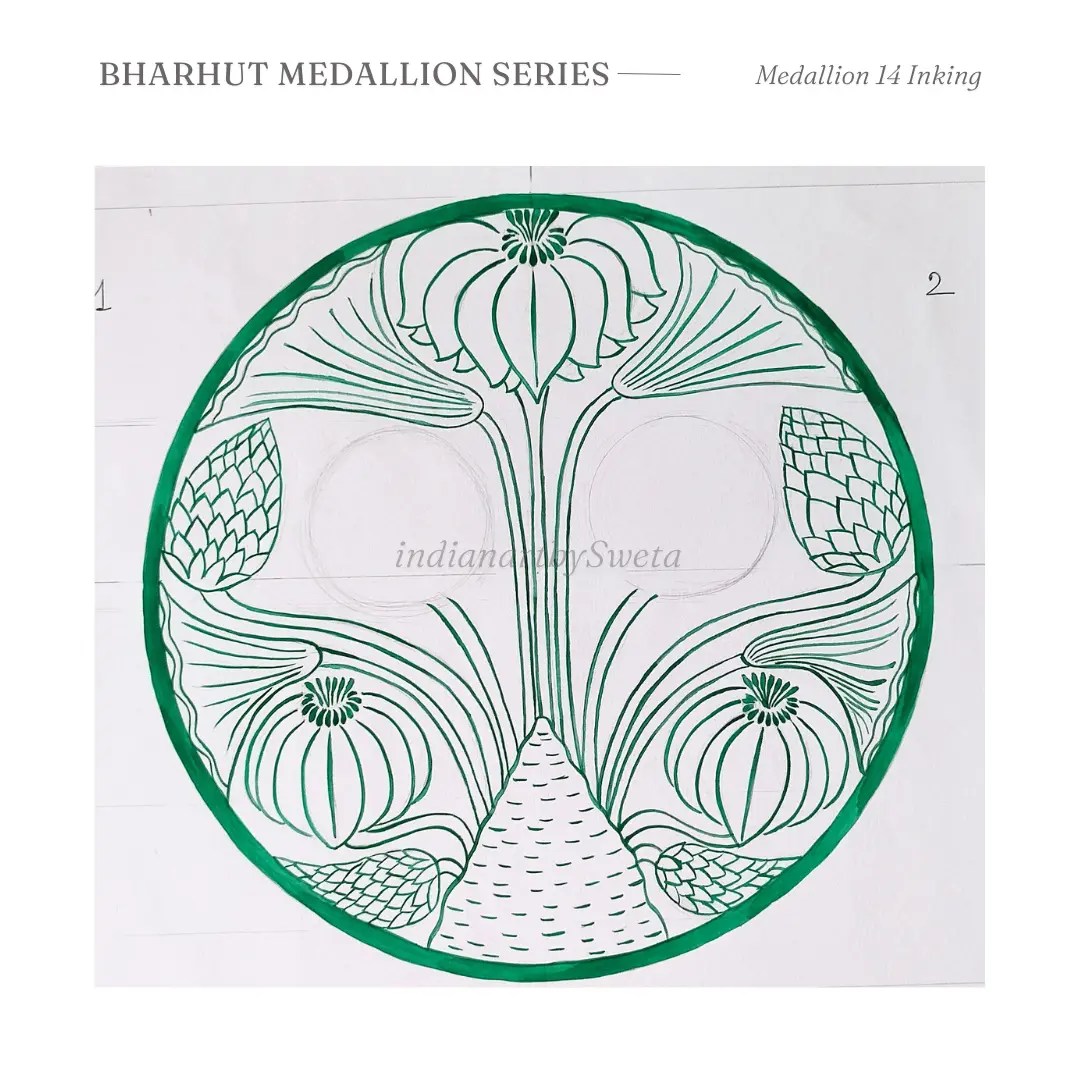
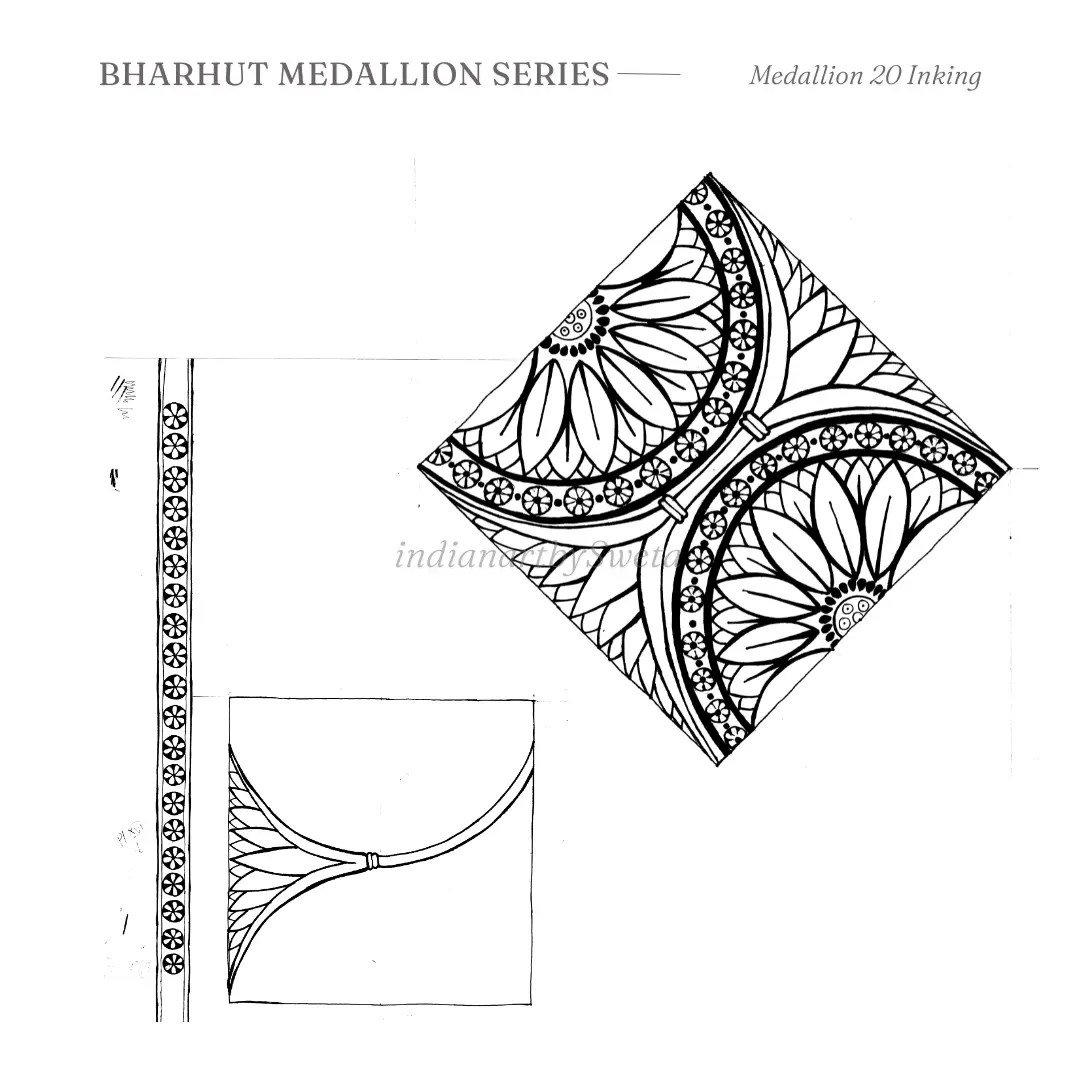

- Hand sketches (A4/A3 sheets)
- Inking with mechanical pens and watercolours
- Digital assembly after scanning
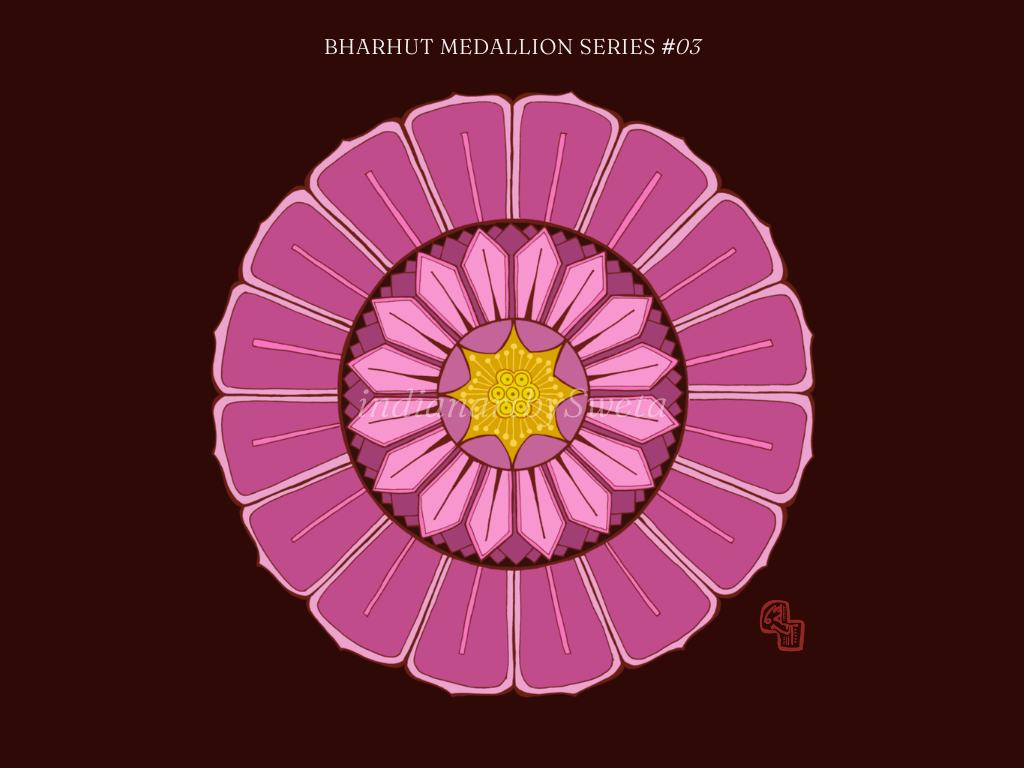
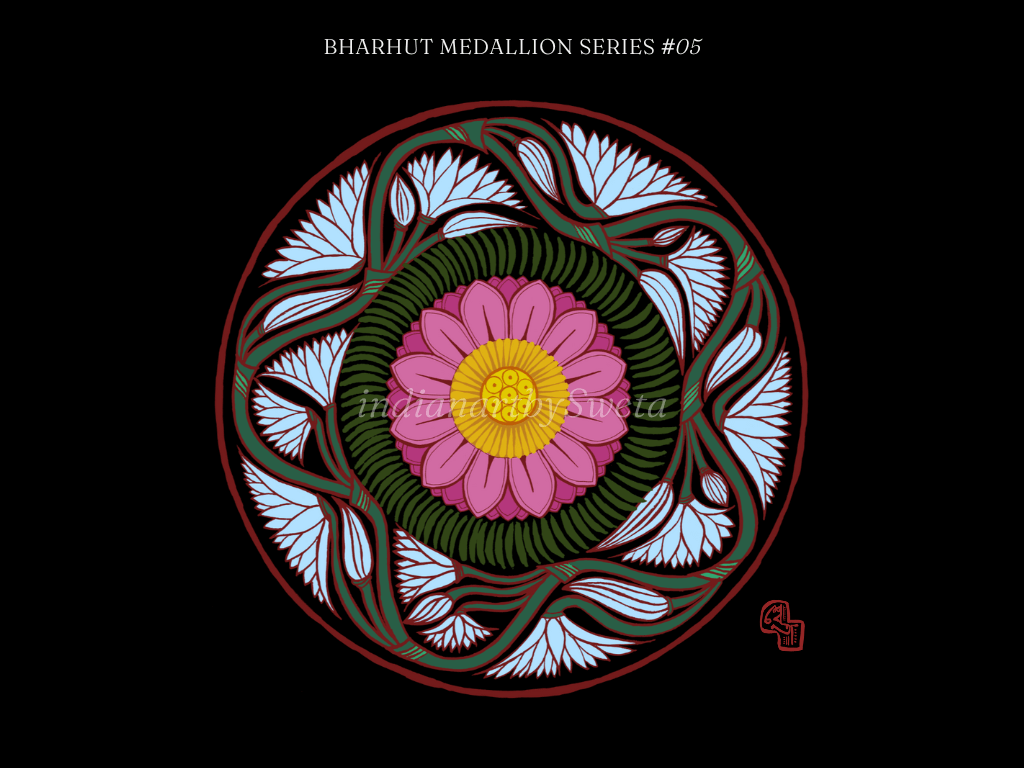
- Coloring in Affinity Photo
Color Inspiration
My first source of inspiration was the dark red sandstone from which the Bharhut stupa was carved. Most medallions in this series feature a deep red as their background, with a few rendered in black to enhance the vibrancy of the colours placed against them.
I drew further inspiration from the Ajanta paintings, studying their palettes through archival photos, and from the natural hues of lotuses, water lilies, and peacocks. The colours of Sri Lankan temple motifs also influenced my choices—since Sri Lanka shares a deep Buddhist cultural connection, it felt like a meaningful reference point.
Finally, I was inspired by A. Ramachandran’s paintings, where he masterfully balances vibrant colours with earthy tones. This harmony between intensity and subtlety guided how I approached color in reimagining the Bharhut medallions.

28 Medallions Showcase











Challenges & Learnings
Working on 28 medallions across nearly two years was as much about discipline as it was about discovery. Using Notion helped me stay on track, but what truly kept me going was the act of returning to the lotus again and again.
As an illustrator, I realized how much this project taught me about seeing:
- The repetition of motifs was never monotonous—each lotus revealed something new about form, rhythm, or balance.
- Negative space became a teacher in itself. The Bharhut artists didn’t treat emptiness as absence but as an active part of the design, shaping movement and harmony.
- Many medallions seemed to hold stillness at their center while creating motion at the edges. For me, this became a way of understanding how art can hold both calm and energy together.
- Working by hand before moving into digital stages reminded me that imperfections carry their own beauty—they made each piece feel alive rather than mechanical.
This series showed me that illustration isn’t only about recreating something from the past. It’s about translating history into lines, colors, and spaces that speak again in the present.
Category
Decorative, Folk art, Heritage art
 Sweta Illustrates